The Stories We Tell Ourselves About Aging — And Why They Matter
🌿One of the most common things I hear from clients when they’re dealing with stiffness, pain, or mobility challenges is, “It’s probably genetic. Everyone in my family has it.”
I understand why people say that. When you grow up watching parents or grandparents struggle with the same issues, it’s easy to assume the outcome is already decided. It can almost feel like you’re simply waiting for your turn.
When clients say this to me, I usually pause and respond with something like, “That’s certainly a possibility. But there may also be things we can do to help manage it. Sometimes small changes can slow progression or help maintain mobility longer.”
That conversation happens more often than you might think.
Genetics absolutely play a role in our health. None of us gets to choose the body we’re born into. But after working with people for many years — and working with my own body along the way — I’ve seen something just as powerful as genetics: the daily choices we make, often without realizing it, shape how our bodies age.
The Stories We Learn To Believe
Many of us don’t actively think about genetic tendencies when we’re younger. We’re busy living our lives. It’s usually not until we begin noticing changes in our own bodies — a stiff knee, an aching shoulder, a tighter back — that something clicks.
That’s when the comparisons begin.
We remember a parent who struggled with joint pain. A grandparent who moved more slowly with age. An aunt who developed the same issue we’re now experiencing. And almost without realizing it, we start connecting the dots.
“Joint pain runs in my family.”
“Everyone gets stiff as they get older.”
“Once things start going downhill, there’s not much you can do.”
Those thoughts feel logical. They’re rooted in observation and memory. But over time, they can quietly turn into conclusions. And when we begin treating those conclusions as inevitable outcomes, they influence our choices — or sometimes begin patterns of limiting activities we usually enjoy.
I’ve seen clients who, once they recognized a familiar pattern from their family history, began to pull back. Not because they were lazy or unmotivated, but because they believed the trajectory was already set. If decline feels unavoidable, it becomes very difficult to invest energy in prevention or maintenance.
And when something feels inevitable, motivation naturally fades.
Trusting Medical Care Without Surrendering Our Voice
Another belief I see often is the idea that once we’ve been given a diagnosis or prescription, there isn’t much left for us to do besides follow instructions and hope for the best.
Medical care is incredibly important, and I am deeply grateful for the knowledge and treatment options available today. But our healthcare works best when it’s a partnership.
Over the years, I’ve seen clients who are on multiple medications to help manage symptoms that also came with side effects that over time were reflected by changes in their skin, lowered energy, or overall sense of well-being.
Sometimes movement, stress reduction, and simple lifestyle adjustments can make a noticeable difference in how someone feels physically and mentally, alongside their medical treatment.
I’m not suggesting replacing medical care. I’m suggesting finding ways of supporting it — and remembering that our daily habits still play a powerful role in how our bodies function.
The Cycle of Pain, Stress, and “No Time”
There’s another story many of us carry, and I understand this one personally.
“I don’t have time to focus on movement right now.”
“I’ll start when work slows down.”
“I’ll deal with it when it gets worse.”
I’ve caught myself in this cycle more than once. Like many of the people I work with, I’ve pushed movement aside when life felt busy or stressful. And like many of them, I’ve felt the consequences when tension or pain eventually became too loud to ignore.
The truth is, pain often makes movement feel harder to begin. But gentle, consistent movement is often one of the most effective ways to reduce tension and maintain mobility. Unfortunately, by the time discomfort forces our attention, we’re often starting from a more limited place.
That’s not failure. That’s being human.
What We Can Do Instead
If you’ve recognized yourself in any of these stories, you’re not alone. And you’re not stuck.
Here are a few simple places to begin:
🌿 Start Smaller Than You Think You Need To
Movement doesn’t have to be intense or time-consuming to be helpful. A few minutes of gentle stretching, walking, or mobility work done consistently can have a meaningful impact over time.
🌿 Pay Attention Earlier
Your body often whispers long before it shouts. Tightness, stiffness, or fatigue are signals worth noticing, not pushing through.
🌿 Stay Curious, Not Defeated
If something feels difficult, instead of assuming it’s inevitable, try asking: “Is there a way to support my body differently?”
🌿 Build a Support Team
That might include medical professionals, movement specialists, or wellness resources that encourage prevention and maintenance, not just symptom management.
Reconnecting the Mind and Body
Sometimes, the fastest way to challenge the stories we carry about aging isn’t through motivation or discipline. Sometimes it begins by simply noticing how our body feels in the present moment.
Gentle, mindful movement can help reconnect us with areas of the body we may have been ignoring, protecting, or assuming were “just getting old.” It can also remind us that change is possible in small, safe ways.
If you’re open to it, here are a few simple movements you can try. These are not meant to fix anything overnight. They are simply invitations to begin listening to your body with curiosity instead of judgment.
Before you begin, a gentle reminder: Move within your current physical limitations. If you have a diagnosed condition, recent injury, or ongoing pain, consult your healthcare provider before trying new movements. There’s no benefit in pushing through sharp or worsening discomfort. These exercises should feel mild and manageable — gentle and consistent always works better than forceful.
🌿 Gentle Movement #1: Cat–Cow Spine Mobility
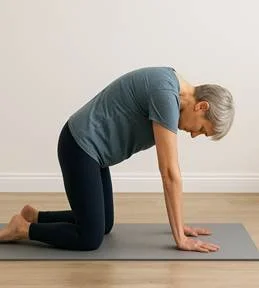
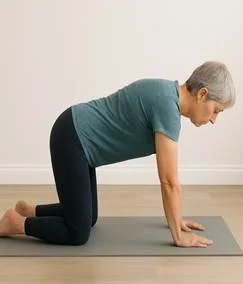
This movement helps wake up the spine and encourages gentle mobility through the back and neck. It can be especially helpful if you feel stiff after sleeping or sitting for long periods.
How to do it:
Start on your hands and knees with shoulders stacked over wrists and hips over knees.
Slowly inhale as you gently drop your belly toward the floor, allowing your chest to open and gaze to lift slightly (Cow position).
Exhale slowly as you round your back, gently tucking your chin toward your chest (Cat position).
Move slowly between these two positions 5–8 times.
What to notice:
Pay attention to areas that feel tight or hesitant. There is no need to force the movement.
🌿 Gentle Movement #2: Cross-Body Shoulder Stretch
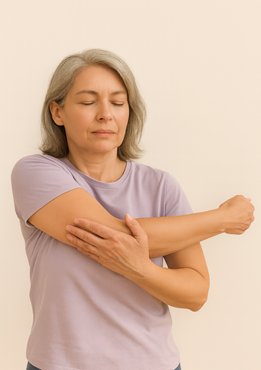
This stretch helps release tension across the back of the shoulder and upper back, an area where many people hold stress and protective tension.
How to do it:
Bring one arm across your chest.
Use your opposite hand to gently support the arm just above or below the elbow.
Hold while breathing slowly for about 20–30 seconds.
Switch sides.
What to notice:
Does one side feel tighter? Does slowing your breathing change how the stretch feels?
🌿 Gentle Movement #3: Seated Spinal Twist
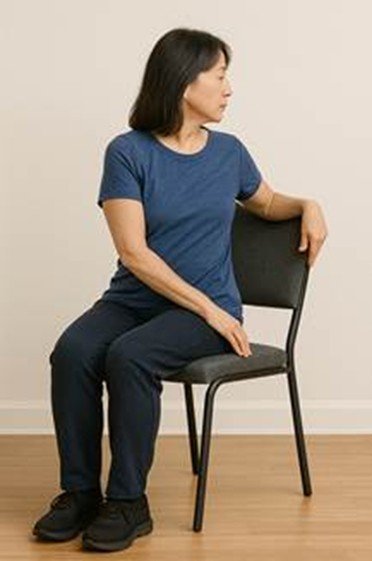
This movement encourages gentle rotation through the spine and helps restore mobility in the mid-back.
How to do it:
Sit upright in a chair with both feet resting on the floor.
Slowly rotate your upper body toward one side, placing your hand on the back of the chair or thigh for support.
Keep the movement comfortable and breathe normally.
Hold for 3–5 slow breaths.
Repeat on the other side.
What to notice:
Does your body rotate differently to each side? Are you able to stay relaxed while you move?
Why Small Movements Matter
Movements like these do more than stretch muscles. They build awareness. They help you gather information about your body. They remind you that change often begins with small, consistent actions rather than dramatic effort.
Sometimes the biggest shift we can make is moving from the belief of:
"My body is failing me,"
to the quieter realization,
"My body is working with me."
If You’d Like More Guidance
If you find these movements helpful and want a structured, gentle approach designed specifically for bodies over 50, my book Resilience Through Movement walks you through simple routines that include step-by-step instruction, safety considerations and modifications for limitations.
A Closing Thought
The stories we tell ourselves about aging matter. They shape how we care for our bodies, how we respond to challenges, and how hopeful we feel about the future.
We may not control every physical change that comes with time. But we do have influence over how we respond, how we care for ourselves, and how willing we are to stay engaged in our own well-being.
Resilience isn’t about avoiding change. It’s about learning how to move with it.
If this message resonates with you, I’d love to continue the conversation with you on my Facebook page, Resilient Living After 50, where I share reflections, movement guidance, and encouragement.
Why Movement Matters More Than Ever
After injuring my back three times this year, I realized I needed a future that didn’t depend on physical strain. That turning point pushed me to pivot — and to finally create a space where I can share what decades of hands-on work have taught me about movement, aging, and resilience. If you’re navigating changes of your own after 50, this blog is for you.
Over the past year, life pushed me to take a hard look at the path I was on. I’ve lived with physical limitations for a long time, but injuring my back three separate times in May forced me to face something head-on: I couldn’t rely on my body to carry the same workload forever. I kept showing up for my clients — because that's who I am — but recovering while still working opened my eyes in a new way. I realized I needed to create a different kind of future for myself, one that wasn’t built on physical strain.
So I asked myself the same question many of us face after 50:
What do I truly have to offer?
And the answer was right in front of me.
It’s the same conversations I’ve had with clients for decades — the ones about movement, pain, habits, aging, resilience, and finding a way forward even when life shifts under your feet. It’s the practical wisdom that comes from working hands-on with real people and from navigating my own body’s ups and downs along the way.
I’ve wanted to build something online for years, but I never felt ready. Then life made the decision for me. When you reach a turning point, you either shrink back… or you pivot. I chose to pivot. And that choice is why this blog exists.
This space — Resilient Life After 50 — is where I’ll share what I’ve learned about staying strong, staying mobile, and staying hopeful as we move through this chapter of life. Movement will be a big part of what I talk about, because movement is the foundation. When your body feels better, everything else feels more possible. But this blog isn’t only about movement. It’s also about adapting, reinventing, and choosing resilience over resignation.
If you're reading this, maybe you’re at your own crossroads.
Maybe your body has been sending you messages you’d rather ignore.
Maybe life is nudging you to change direction.
Or maybe you just want to feel better, move better, and live with more intention.
Wherever you are, you’re welcome here.
In each post, I’ll share practical movement guidance, real stories from my work, reflections on resilience, and honest conversations about navigating life after 50. My goal is simple: to offer something real you can apply to your life — without overwhelm, without pressure, and without perfection.
If you’d like to join the conversation, you can find me on Facebook at Resilient Living After 50. That’s where I’ll be sharing weekly reflections, movement tips, and encouragement as we build this community together.
Here's to resilience, to movement, and to the next chapter.
We don’t choose everything life hands us — but we do get to choose how we move forward.
Movement/Practical Body Wisdom
One thing I’ve learned after years of working with clients — and through my own ups and downs — is this:
Movement doesn’t have to be big to make a big difference.
We often think we need a full workout or perfect routine to “count,” but the truth is, your body responds beautifully to small, simple, consistent moments of movement.
A stretch before getting out of bed.
A gentle walk.
Rolling your shoulders while you wait for your coffee.
If you’ve been feeling stuck, stiff, or unsure where to begin, start with one small thing. Your body will meet you where you are.
This week’s blog post goes deeper into why movement matters so much at this stage of life — and why it’s never too late to begin again.
LINK: [Insert your blog link once published]
QUESTION:
What’s one small movement your body is craving today?